Preserve Touch DNA on Fired Casings!
If you are serious about collecting and preserving trace (DNA) evidence, you should be using the Case Grabber.
Watch The Video

New, improved model now available.

NOW AVAILABLE AT:

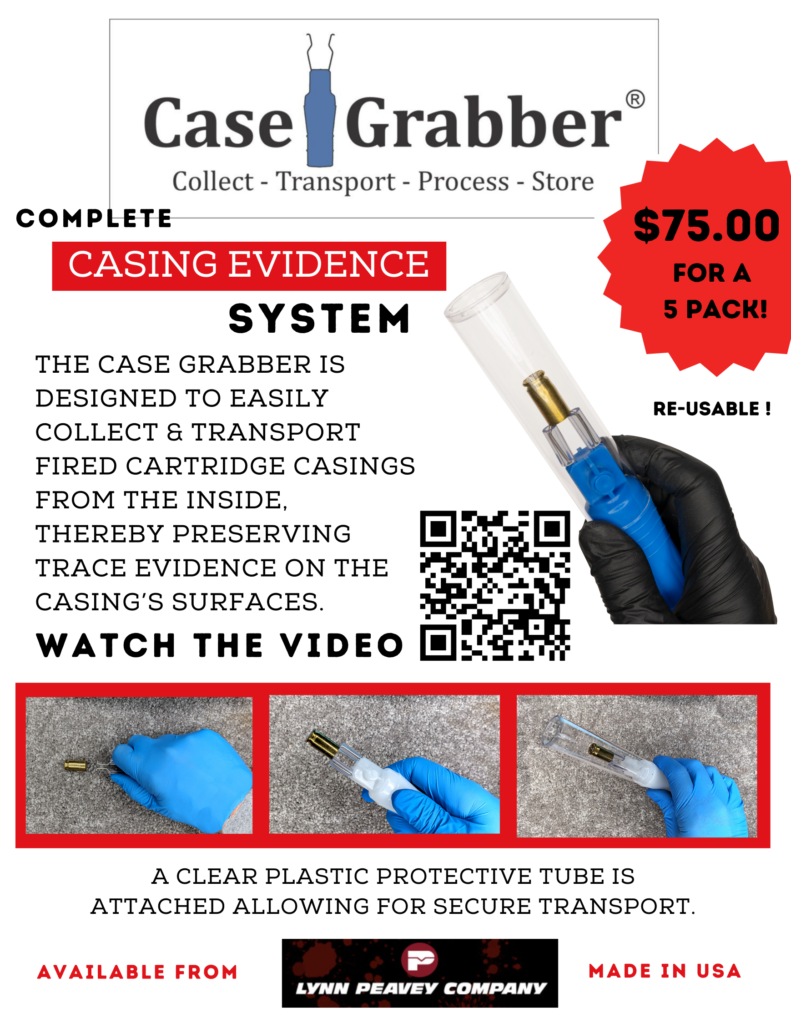
The Case Grabber is designed to easily collect fired cartridge casings from the inside thereby preserving trace evidence on the casing’s surfaces. A clear plastic protective tube is then attached allowing for secure transport.
Back at the lab, the clear tube is removed and the casing can be readily examined, swabbed for DNA, or processed for latent prints. After processing, the casing can be dropped into the tube for storage.
The Case Grabber is a RE-USABLE collection tool.
“One size fits all”
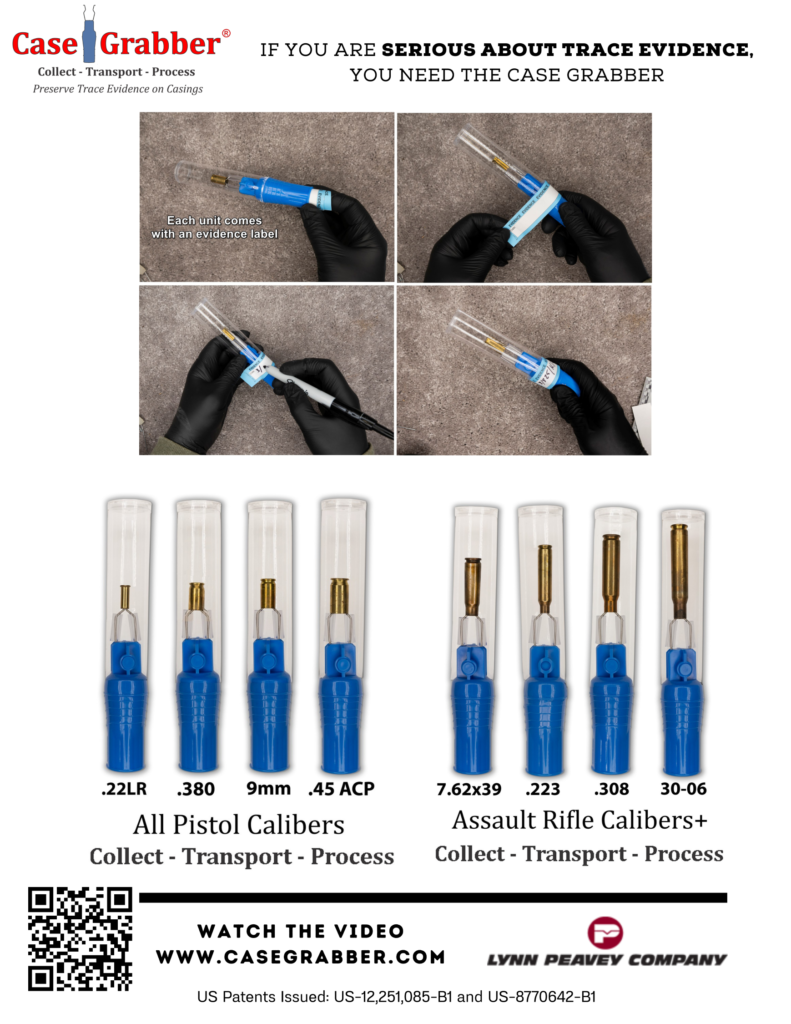
Works with all pistol and rifle calibers: .22 short, 9mm, .45ACP, .223, 7.62×39, .308, etc.


Each Case Grabber comes with an evidence sealing tape (curled-up inside the body for easy access).
A casing recovered at the scene can be quickly collected, sealed and marked for safe, protected transport.
If you are serious about collecting and protecting trace (DNA) evidence, you should be using the Case Grabber.
Agencies Interested in Testing the Case Grabber?
We can provide test samples. Or if you have questions:
Contact below:

Standard evidence handling and packaging can remove/transfer trace evidence. Potentially damaging.
Read the scientific papers:
Click to download



——————————————————————————

Casings should not be collected and transported in item boxes and envelopes as this can remove trace DNA:
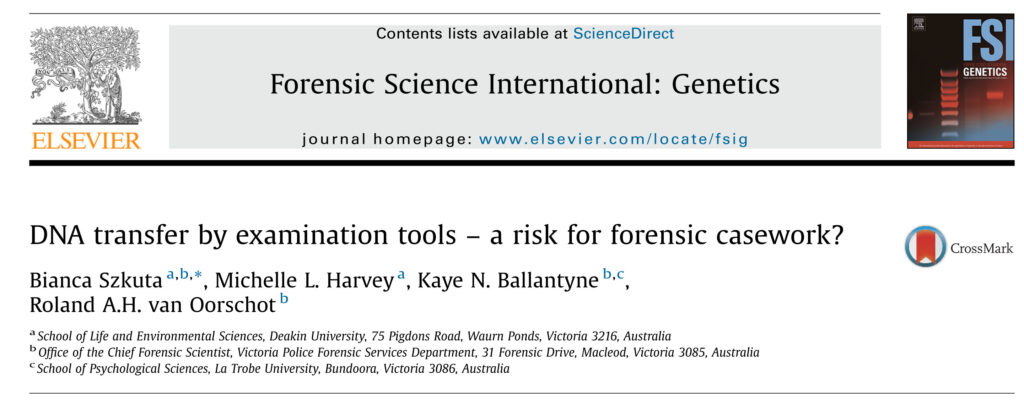
“DNA transfer within packaging is not only a possibility but, under certain conditions, a very likely occurrence. The average DNA loss was 56.2% . . . “
————————————————————————–

This paper shows that significant quantities of DNA are frequently: (a) transferred from the exhibit to the inside of the packaging and (b) transferred from its area of initial deposit to other areas of the same exhibit and/or to other exhibits within the same package. There is a distinct possibility of failing to generate adequate profiles in instances where the DNA content may otherwise have been adequate, and for the misinterpretation of a result that could impact negatively on the criminal investigation and court outcome. These findings highlight the need for improvements in the collection
and packaging of forensic casework exhibits for DNA analysis.
The Case Grabber can collect and transport all pistol and most rifle casings: .22 short, .38, 9mm, .45 ACP, .223, 7.62×39, .308, etc


U.S. Patents 12,251,085 and 8,770,642
Cleaning Instructions for DNA Sterilization
First, it is important to realize that if properly used, the exterior of the fired casing will not come in contact with the Case Grabber surfaces. So, sterilization may not be required. Agencies will decide their own policy.
Cleaning Instructions
Soak the entire Case Grabber and the clear tubes in fresh 10% bleach solution (1 part household bleach to 9 parts water, ~0.5–0.6% sodium hypochlorite) for at least 10 minutes. This is a reliable forensic standard for degrading amplifiable DNA.
- Rinse thoroughly with DNA-free/distilled water to remove bleach residue (which could corrode materials or interfere with future evidence).
- Air dry completely in a clean area, or use filtered compressed air.
As stated above, when used properly there should not be any contact with the casing’s exterior. One caveat is that when swabbing the casing, do not allow the swab to come in contact with the two “tweezer” arms that are outside the casing. Stop the swabbing at least approximately 2mm above the opening.